
Burford Capital, by nearly every metric, is the world’s largest litigation funder by a significant margin, specializing in legal finance, risk management, and complex legal disputes. When considering who to interview next for Legal Finance Expert (LFE), I picked up the phone and called my old friend, Joe Durkin.
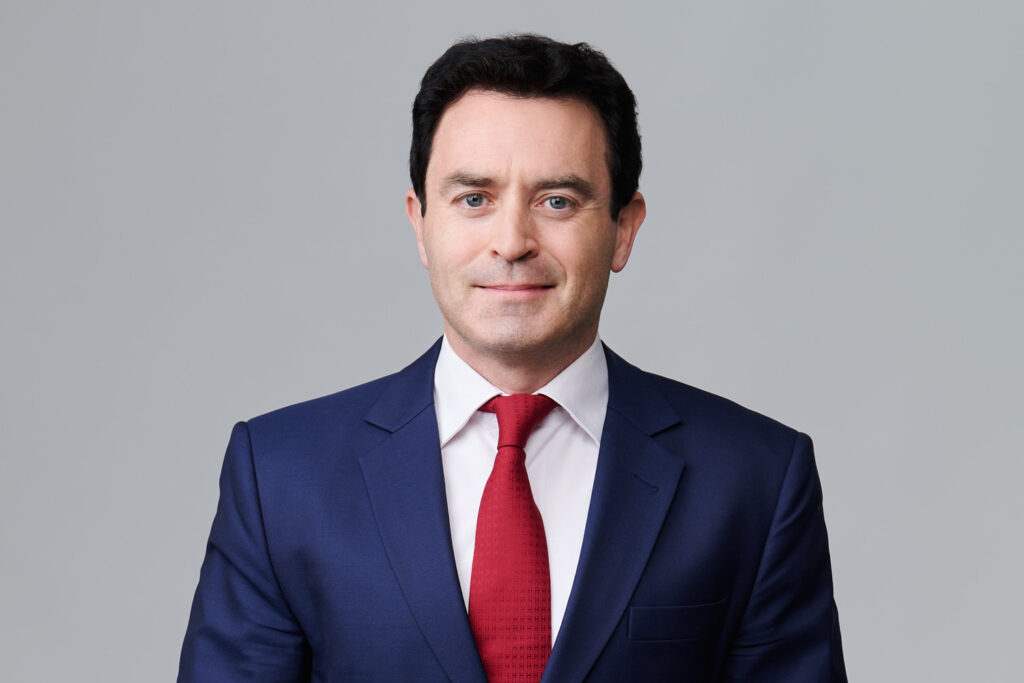
Joe Durkin is a Senior Vice President in Burford’s asset recovery business, responsible for legal finance investments across the UAE, Saudi Arabia, Qatar, and the wider Middle East and North Africa region. He specializes in the assessment, underwriting, and management of construction, arbitration, and commercial litigation disputes.
Before joining Burford, Joe served as an Investment Manager at LCM Finance, another key player in the industry, where he led the firm’s origination strategy throughout the MENA region. Prior to that, he was Managing Partner at Falcon Partners Limited, overseeing business operations involving GCC conglomerates and Fortune 500 companies.
Joe has his finger firmly on the pulse of the global legal finance market, and we sat down to discuss how he views the evolving legal finance landscape, where he sees the market heading, and to take a closer look at litigation funding in the GCC and India.
Legal Risk and Market Evolution
You’ve been in Dubai for 20 years and you’ve watched this region go through several full cycles. What’s changed most about how businesses here think about legal risk?
The biggest shift is global rather than specific to the UAE. Before 2008, businesses generally assumed stability and treated legal risk as something to manage only when problems arose.
Since the financial crisis, the pandemic and recent geopolitical developments, that mindset has changed. Companies now assume disruption and think about legal risk much earlier, including when structuring transactions, selecting counterparties and planning for downside scenarios.
You can see that clearly in the UAE alongside the continued development of legal infrastructure and cross-border business. Legal risk is now approached in a more structured and forward-looking way.
At Burford, we also benefit from extensive data across disputes, outcomes, jurisdictions and decision-makers. That helps identify patterns across cases rather than treating each matter in isolation.
The litigation and arbitration experience matters because it helps interpret those patterns. Having acted as counsel and arbitrator, you understand how arguments are received, where cases tend to turn and how issues like evidence and quantum play out in practice.
So when assessing a case, you are not just looking at whether there is a legal argument. You are assessing how it is likely to be tested and resolved in reality.
Explaining The Intersection of Burford with Global Legal Finance
In a global market where litigation funding is still developing, how do you explain what you do in a way that resonates with clients?
I keep it very simple and commercial.
I describe it as us taking on the cost and risk of a legal claim in return for a share of the outcome. That resonates more than describing it as “funding litigation”.
The discussion then becomes about capital allocation and risk management. Disputes are expensive, uncertain and can take years to resolve. The question for companies is whether they want to deploy their own capital and carry that risk, or bring in a third party to do it for them.
What are the most common misunderstandings you come across when discussing litigation funding?
The main misconception is around alignment.
Some corporates assume that bringing in a funder adds another layer of complexity or conflicting interests. In practice, our interests are closely aligned because we only succeed if the client succeeds.
With law firms, the discussion is usually more practical. It focuses on how funding fits with the conduct of the case and ensuring that the lawyer-client relationship remains central.
Walk me through the logic of a funding decision. What makes you say yes and what makes you walk away?
We look at cases holistically, but there are a few core questions.
First, merits. Is there a strong legal case?
Second, enforcement. If the case succeeds, is there a realistic path to recovery?
Third, economics. Does the value of the claim justify the time, cost and risk involved?
And finally, people. We look closely at the quality of the legal team and the client because these matters are often long-term and complex.
All of this goes through a structured investment process involving experienced lawyers and investors.
We walk away where those elements do not align and the overall risk-return profile does not work.
The GCC

The UAE alone has the DIFC, ADGM, onshore courts and DIAC. Where does litigation finance plug in most naturally?
It is less about any one forum and more about whether there is a clear path from claim to recovery.
The UAE has a layered system involving onshore courts, the DIFC and arbitration. Many disputes engage more than one forum at different stages.
Legal finance works best where there is a commercially coherent route from claim to enforcement. That may involve arbitration in sectors like infrastructure or aviation, followed by recognition in one jurisdiction and enforcement in another.
We are active across local courts and common law courts in the region. The focus is not on one forum versus another, but on how they work together.
The challenge arises where enforcement is uncertain or the economics are marginal. If recovery is unclear or the claim value does not justify the process, it becomes harder to structure a viable investment.
Saudi Arabia has overhauled its commercial courts and arbitration framework. How much has that changed the practical landscape for a funder?
It has made a meaningful difference in terms of confidence and visibility.
The reforms provide a clearer framework around arbitration and the courts, which matters because it allows funders to assess how cases are likely to progress and how outcomes can be enforced.
The SCCA and the modern arbitration law create a more predictable forum for resolving disputes, especially in cross-border matters.
The impact is less about changing the underlying economics and more about making the market easier to analyse and invest in.
Oman and Qatar do not get much attention in this conversation. What’s the case for them?
The key issue is scale.
In markets like the UAE and Saudi Arabia, there is a high level of cross-border activity and therefore a larger volume of disputes. That naturally creates more opportunities for legal finance.
In Oman and Qatar, the frameworks are there and legal finance can absolutely work. We have been involved in matters in the region, including arbitrations seated in Oman.
The difference is simply that the overall volume of disputes is lower. As those markets continue to grow and generate more cross-border disputes, you would expect legal finance activity to increase alongside that.
This region runs on relationships and discretion. How is the involvement of a third party viewed?
Once a dispute has arisen and a party decides to pursue arbitration or litigation, the main issue becomes how that process is funded.
In most arbitration forums, and increasingly in common law courts, there are disclosure requirements around legal finance. That said, the existence of funding does not change the legal position the other side faces.
If anything, the presence of a funder can signal that the claim has been independently assessed and underwritten.
In practical terms, it is not materially different from a client instructing counsel or experts. The funder sits alongside the legal team, confidentiality is maintained and the conduct of the case remains with the client and its lawyers.
Are GCC-based entities becoming genuine clients in their own right?
Very much so.
We work with international companies with disputes in the region, but also with regional clients, including entities operating within the broader sovereign ecosystem.
That reflects the structure of the economies in the UAE and Saudi Arabia, where much of the commercial activity sits within or alongside sovereign-backed platforms.
You see that across sectors like energy, aviation, infrastructure and banking, where significant disputes often involve cross-border elements and complex enforcement issues.
At the same time, international corporates remain a major part of the pipeline. Increasingly, regional clients are engaging with legal finance in a more sophisticated way as the market develops.
Restructuring
You do a lot of restructuring work. How do you help distressed companies realise value from legal claims?
The same core considerations still apply: merits, recovery and economics.
The additional issue in a restructuring context is how the legal finance fits within the broader capital structure.
Where a distressed company has a claim sitting on the balance sheet, the problem is often that the claim is illiquid and may take years to realise. Legal finance allows that claim to be pursued without diverting cash away from the restructuring itself.
Importantly, this is not conventional debt. It is non-recourse capital that is repaid only from recoveries if they are made.
Typically, the funder’s return sits within the recovery waterfall rather than alongside existing creditors, so it does not displace them.
Rather than creating tension with the restructuring, legal finance can often form part of the solution.
There has been significant stress in real estate and construction across parts of the GCC. Are those disputes fundable?
Yes, although they are highly fact-specific.
Real estate and construction have always generated a large volume of disputes in the region.
Well-documented claims around payment disputes, variations or contractual entitlement can work well for legal finance because the merits and quantum can be analysed clearly.
The difficulty comes where disputes involve multiple parties, overlapping claims or weak documentation. That makes it harder to isolate and price risk.
So we do see opportunities in those sectors, but we approach them in the same disciplined way as any other area.
India

India has the IBC, a growing arbitration market and a legal sector that is opening up. What made this feel like the right moment for Burford to push into India?
It is really the convergence of several factors.
You have a more structured insolvency regime through the IBC alongside steady growth in arbitration. Together, they provide a clearer framework for assessing and pursuing claims.
At the same time, India generates a significant volume of complex commercial disputes, both domestic and cross-border.
The relationship between India and the UAE is also important. India is the UAE’s second-largest trading partner, and that level of commercial activity naturally gives rise to cross-border disputes and enforcement opportunities.
So it is less about one development and more about the legal framework, dispute volume and cross-border activity all aligning.
The courts still carry a reputation for delay. Does that hurt a litigation funder?
It is something you factor in, but not a barrier in itself.
For a funder, time is simply one of the variables you underwrite alongside merits, enforcement and quantum.
Where you see the strongest alignment is in arbitration. Reforms to the Arbitration Act from 2015 onwards have made the process more structured and predictable, especially in cross-border disputes.
There is also a growing focus on enforcement and monetisation. In some cases, that extends beyond financing claims into acquiring or financing arbitral awards.
So delay does not prevent legal finance. It is something you structure around.
Who is the typical client in India at this stage?
It is still a developing market, so there is no single typical client.
At a basic level, demand is driven by scale. India is now one of the world’s largest economies with a huge corporate base and high levels of commercial activity.
Historically, much of the demand has come from cross-border matters involving international companies with Indian exposure or Indian parties involved in international arbitration.
Increasingly, however, domestic corporates are also showing interest, particularly around monetising claims or awards rather than carrying them on the balance sheet.
So in practice, demand spans both international and domestic disputes.
The IBC has been through significant reform. Does that change the economics of funding insolvency-related claims?
It changes the level of clarity more than the economics themselves.
The IBC introduced a more structured and creditor-driven process with defined timelines and clearer rules around recoveries.
From a legal finance perspective, that matters because it gives better visibility on how claims are treated and how recoveries may flow.
The core economics still come down to merits, recovery and quantum, but the framework reduces uncertainty and makes the market easier to underwrite.
The Wider Market
Burford is the dominant player by most measures. Does that help you or create friction?
I think it is broadly helpful, particularly in a developing market.
A large part of what you are doing in this region is building understanding around how the product works and how it fits within a company’s broader approach to risk and capital.
Having scale and an established track record helps because it gives clients and law firms confidence that this is a mature and institutionalised product.
We have been active in Dubai and the wider region for years, including deploying capital in the DIFC. Over time, you can see the market becoming more sophisticated and conversations becoming more advanced.
If anything, scale supports the development of the market by creating credibility and consistency.
Who are you competing with in these markets?
Most often, we are competing with the decision to self-fund or not pursue a claim at all.
Clients are usually deciding whether to tie up their own capital and carry the cost and uncertainty internally, or to bring in a third party to take on that exposure.
Ultimately, it comes down to how they want to manage risk and capital around disputes.
Are sovereign wealth funds or family offices starting to take litigation finance seriously as an asset class?
There is definitely growing engagement.
Litigation finance fits naturally within the broader sovereign ecosystem that underpins much of the region’s commercial activity.
On the family office side, it may be even more relevant. In markets like Saudi Arabia, a large proportion of companies are family-owned, so capital is concentrated and actively managed.
In that context, the ability to monetise claims or allocate risk around disputes fits naturally into broader capital management strategies.
So awareness is moving into more active engagement, although it is still a developing area.
India does not yet have a dedicated regulatory framework for third-party funding. How does that affect how you structure deals?
Third-party funding is not prohibited under Indian law, and the Supreme Court has confirmed that third-party funding itself is permissible.
You also have procedural frameworks in certain jurisdictions that expressly contemplate third-party funding.
More recently, newer arbitration frameworks, including those emerging in GIFT City, recognise legal finance and address issues like disclosure and conflicts.
From a funder’s perspective, that creates a workable level of clarity.
So I would not describe it as a long-term constraint. The overall direction is towards greater formalisation and clarity.
Law firms are central to how you reach clients. How do you build those relationships?
The relationship works because legal finance aligns with how firms already advise clients.
Law firms guide the client through the legal process. What we provide is the ability to take on the cost and risk associated with the case.
In many jurisdictions, discussing funding options is already part of standard practice. Litigation funding simply becomes one option alongside more traditional approaches.
So it is about adding optionality rather than changing the lawyer-client relationship.
Over time, as firms see how legal finance works in practice and benefits clients, those relationships develop naturally.
Looking Forward
What does your pipeline tell you about the next 12 to 18 months?
The broader trend is towards greater sophistication in how disputes are managed.
You continue to see activity in capital-intensive and contract-driven sectors such as infrastructure, energy and construction.
There is also growing focus on enforcement and recovery, particularly where parties are looking to realise value from existing claims or awards.
More broadly, legal finance is being applied across a wider range of situations, including portfolios and more structured arrangements.
If you are sitting here in five years, what does this business look like?
The core model will remain the same, but its application will broaden significantly.
You are already seeing a move away from single-case finance towards portfolio arrangements and more structured solutions integrated into broader balance sheet management.
There will also be a greater focus on monetisation, including acquiring or financing awards and treating claims as actively managed assets.
On the decision-making side, data and analytics will continue to develop, although they will still sit alongside legal and commercial judgement.
More broadly, legal finance will become less of a specialist solution and more of a standard part of how companies manage disputes and legal risk.
What’s the one thing about litigation finance in this part of the world that you wish more people understood?
That it is fundamentally a balance sheet question rather than just a legal one.
Disputes are often treated as extraordinary costs, while any recovery may be uncertain and years away.
Litigation finance changes that dynamic. It allows businesses to manage the risk and cost associated with disputes and, in some cases, realise value from what would otherwise remain a contingent asset.
Once companies look at it through that lens, it becomes much easier to see where it fits within the business.

No responses yet